 |
 |
 |
|
|
|
|
|
|
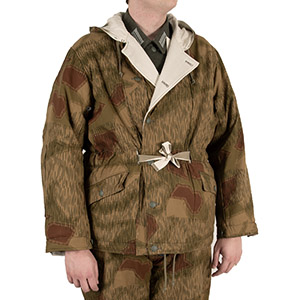
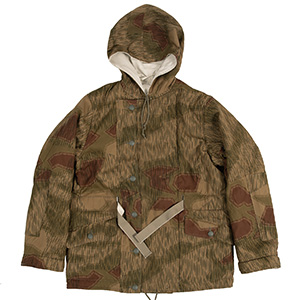
Parka in Marsh 43 camouflage
|
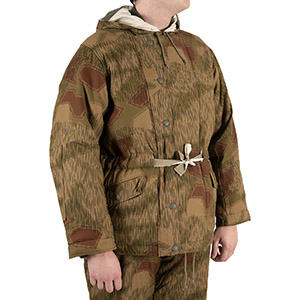
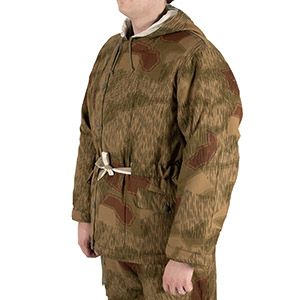
Storm flap closed
|
Model is 6'5", 240lbs, wearing
a size 3 parka
|
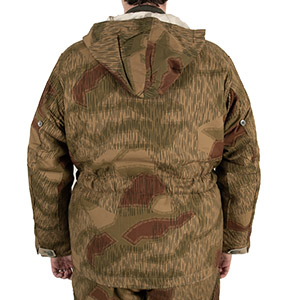
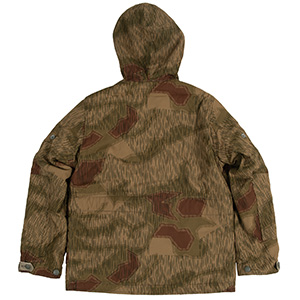
Rear detail
|
|
|

|
|
| Front view |
Rear view |
Size stamp under storm flap |
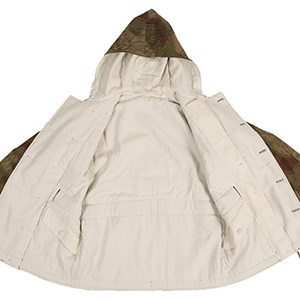
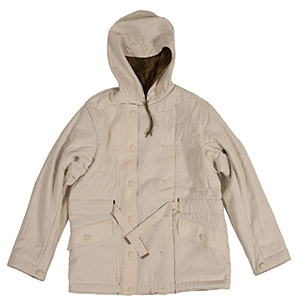
Fully reversible to white |
|
|
|
|
| White side |
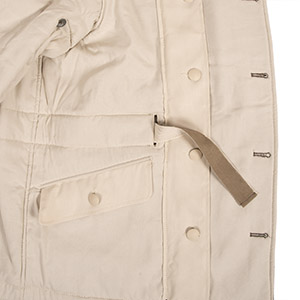
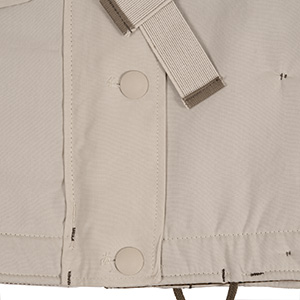
Web belting at waist and cuffs |
Correct bartack reinforcements |
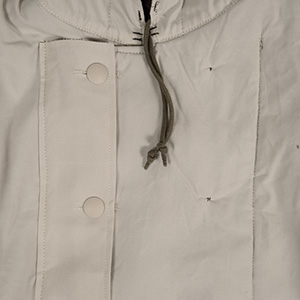
19mm pebbled buttons, 26mm
corded buttonholes, olive cotton drawcords |
Reproduction of the second design of the reversible winter parkas, sometimes referred to as the
Winteranzug 43. After the first runs, the Germans added elbow reinforcements and redesigned the hood slightly for a better fit. This model was standard issue for Heer and Luftwaffe troops from late 1943 through the end of the War. It was worn currently with both the gray and splinter camouflage models, with some soldiers being issued parkas and trousers in different patterns. Judging from the relatively large number of surviving original examples, it appears that this pattern was replacing splinter by the end of the War.
Marsh pattern: The camouflage variant used on these reproductions is what collectors have christened Marsh 43 (Sumpftarnmuster 43), sometimes still referred to as "Tan and Water" pattern as well. There is also "Marsh 44", which differs only in that borders of the brown and green blocks lack any hard edges- they are entirely stippled. Both patterns were in common use in 1944-45 and some original garments exist with parts made from both patterns mixed together. There is ZERO meaning to the patterns when it comes to which unit(s) wore which. It was simply manufacturing variations and adjustments.
ATF Winter Uniforms
These garments are not related in anyway to our previous productions- they share zero DNA with those or any other company's products.
The major difference from the last run is the fabric. The Germans created fine yarn, tightly woven rayon specifically for the reversible winter uniforms. An analysis and specifications of which are detailed in US Army's 1945 assessment of German camouflage fabrics (The Richardson Report). Using those specs as well as original fabric samples we had the cloth recreated.
Authentic winter uniforms have a somewhat peculiar feel- smooth, relatively soft, but tough. These reproductions feel the same, because the fabric is identical- same yarn size, same weave, same thread count and so forth. Like the originals it has a DWR (durable water repellent) treatment. The buttons, pull cords and waist band webbing are all copied from originals.
The Marsh 43 camouflage was copied from original samples, using a 50cm repeat, no added (fake) artwork, printed with fiber reactive dye which keeps the cloth soft.
The lining is now the heaviest polar fleece available- 400 grams per meter which is equal in weight to the Reißwolle used in originals. The insulation in WWII garments was a variable blend of recycled wool, rayon and cotton which could only be reproduced in a high quantity which would raise the price substantially. I chose the fleece due to it having the same thickness and feel, equivalent or superior thermal qualities, and it's a tad lighter in weight. Yes, some of the history ninnies may howl, but the insulation isn't visible anywhere and they only know there's something to whine about because I told them.
The garment patterns themselves were made directly from my original examples. These are a roomy, loose fitting jacket made large enough to wear multiple layers underneath. The hood is large enough to wear over a cap or helmet.
Water Repellent: The shell fabric used on all the reversible Winter garments has been treated with Teflon- a PFOA free DWR (durable water repellent finish). This allows the fabric to shed freezing rain and drizzle quite well, as well as making it resistant to staining. The coating is not visible, but it does make the fabric feel slightly softer.
Does it make the fabric stiff? Not at all. That's Facetard BS.
Doesn't Telfon make your hair fall out? This isn't the same stuff that's peeling out of your skillet. It was reformulated in the 2000's to comply with EPA and EU safety and environmental standards and it's Bluesign approved. It's chemically bonded to the fabric at over 350 degrees during the finishing process- it never comes off.
Fit: These are sized like the originals which were made to allow room for several layers of clothing to be worn underneath. When new, they run long to allow for shrinkage.
Washing: The best option is to hand wash these in cold water. Shrinkage will be about 2" in the sleeve length and 3" for the body. They take about 24 hours to dry when hung over a boot dryer.
We do not recommend using a clothes dryer! We tested this and it increases the shrinkage and it seems to cause the insulation to shift & twist inside the sleeves. However, the insulation will eventually settle back into place with continued wear.
Imported
Making these in USA would double the price and we'd still have to import all the materials.
|
|
|
 |
|
 |
|
 SIGN IN
 SHOPPING BAG ()
 270.384.1965